
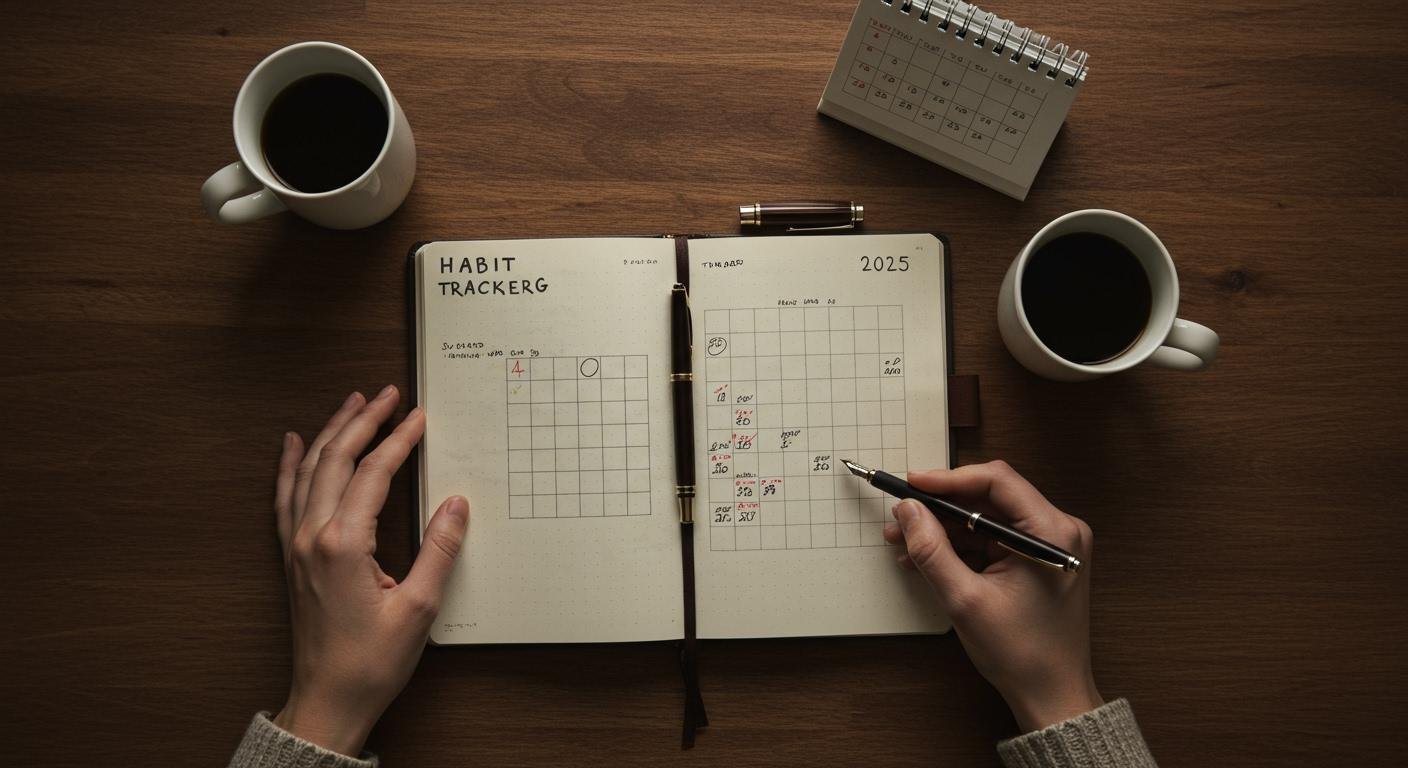
Do you feel tired from staring at screens? With Americans averaging over 12 hours of screen time daily, that mental fog is real. If you’re done with daily routine apps, it might be time to track daily habits the analog way. This simple routine helps you improve productivity.
Your new daily routine planner could be a Bullet Journal, a ‘Don’t Break the Chain’ Calendar, or a simple Habit Notebook. This kind of daily habit tracking creates a powerful, tangible connection to your habits. The physical act of tracking your routine makes your commitment to that routine feel more real. This routine is all about you and your goals, no login required.
Why Go Analog Over Daily Routine Apps?
You might wonder if ditching your daily planner app is a step backward. But stepping away from daily routine apps can actually be a huge leap forward for your goals. Let’s explore why a simple notebook often beats even the best daily routine apps.
The Power of a Physical Record
When you write something by hand, your brain works differently than when you type. Neuroscience research shows that handwriting activates more complex neural networks related to learning and memory. The simple act of forming letters with a pen forces your brain to pay closer attention.
This physical tracking creates a stronger connection to your routine. Your brain gets a powerful mix of signals from your hand’s movement and what you see on the page. This process helps you remember your commitments and makes your routine feel more important. It’s a level of engagement most daily checklist apps just can’t replicate.
Reducing Screen Time and Digital Fatigue
We all know that too much screen time is a problem. It can disrupt sleep and increase feelings of anxiety and depression. Relying on daily routine apps adds to this digital overload. Every notification and login keeps you tethered to your device. Choosing an analog routine is a simple way to build a screen-free habit into your day. This small break gives your eyes and mind a much-needed rest, helping you feel more focused and calm.
Beyond Digital: The Limits of Daily Checklist Apps
Have you ever downloaded a new daily checklist tool, used it for a week, and then forgotten about it? You’re not alone. Studies show that most people abandon daily checklist apps very quickly.
| Timeframe | Users Who Stop Using the App |
|---|---|
| After 1 Day | 60-70% |
| After 30 Days | 85-88% |
| After 90 Days | 92-97% |
Many daily checklist apps fail because they are too complicated, have a steep learning curve, or hide useful features behind a paywall. This makes the tracking process a chore. An analog system for your routine avoids these issues. It is simple, free from distracting notifications, and completely customizable to your needs. You are in control of your tracking, not the app.
Three Simple Ways to Track Daily Habits
You are ready to track daily habits without the digital noise. Let’s move past the theory and into action. Forget the endless options of daily routine apps. You do not need the best daily routine apps to build a better routine. The best system is the one you actually use. The beauty of analog tracking is its simplicity. You can start right now with a pen and paper.
We will explore three powerful methods. Each one offers a unique approach to building good habits and creating a consistent routine. Unlike many daily checklist apps, these systems put you in full control. Your new routine is built on your terms.
Here are the three methods we’ll cover:
- The Bullet Journal (BuJo): Perfect for creative people who want an all-in-one system for their entire life.
- The ‘Don’t Break the Chain’ Calendar: Ideal for visual thinkers who want to focus on building one single, crucial habit.
- The Dedicated Habit Notebook: A minimalist’s dream for straightforward, no-frills tracking of your daily routine.
Tip: Don’t feel pressured to pick the “perfect” method right away. The goal is to start your tracking journey. You can always switch your approach later. The most important step is the first one you take to improve your routine. Many daily checklist apps make you feel stuck, but paper gives you freedom.
Choosing one of these tangible tools helps you connect with your goals on a deeper level. Let’s dive into the first method and see how it works.
Method 1: The Bullet Journal (BuJo)
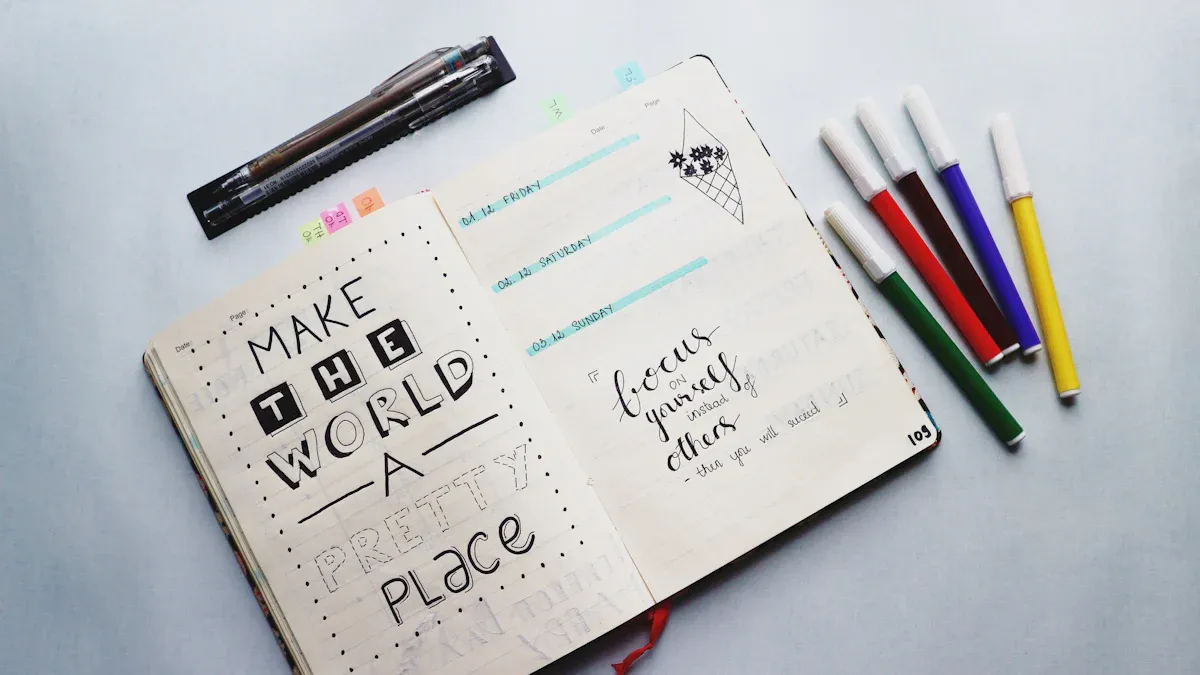
The Bullet Journal is more than just a notebook; it’s a complete system for organization. Creator Ryder Carroll developed it to manage his own ADHD. He needed a flexible tool to help him focus and be productive. His personal solution became a worldwide phenomenon. The BuJo is your all-in-one daily routine planner, a space for your tasks, and a place to track daily habits.
The Basics
Getting started with BuJo tracking is simple. You create a “habit tracker” page for each month. This is usually a grid.
- List the habits you want to build down the left side of the page.
- Write the days of the month (1-31) across the top.
- Each day you complete a habit, you fill in the corresponding box.
You can use any symbols you like, but here is a common system:
| Symbol | Meaning |
|---|---|
| X | Completed the habit |
| • | Made a note about it |
| → | Moved the task to another day |
This visual tracking gives you a clear snapshot of your consistency. It’s a powerful part of your daily routine.
Who It’s For
The Bullet Journal is perfect for you if you are a creative person who loves to customize everything. It’s for the person who finds a standard daily planner app too restrictive. Unlike many daily checklist apps, a BuJo puts you in control of your routine. It’s an amazing tool to help you stay organized because it:
- Keeps a record of everything you need to do.
- Helps you reprioritize tasks when your day changes.
- Forces you to be mindful of your routine through daily interaction.
If you want a single notebook to manage your entire life—from your daily routine to long-term goals—the BuJo is your best bet. It combines planning and tracking in one place.
What You’ll Need
You don’t need fancy supplies to start this routine. Forget the pressure to create a masterpiece. All you truly need are two things:
- A notebook 📓
- A pen 🖊️
That’s it. You can start building better habits right now.
Method 2: The ‘Don’t Break the Chain’ Calendar
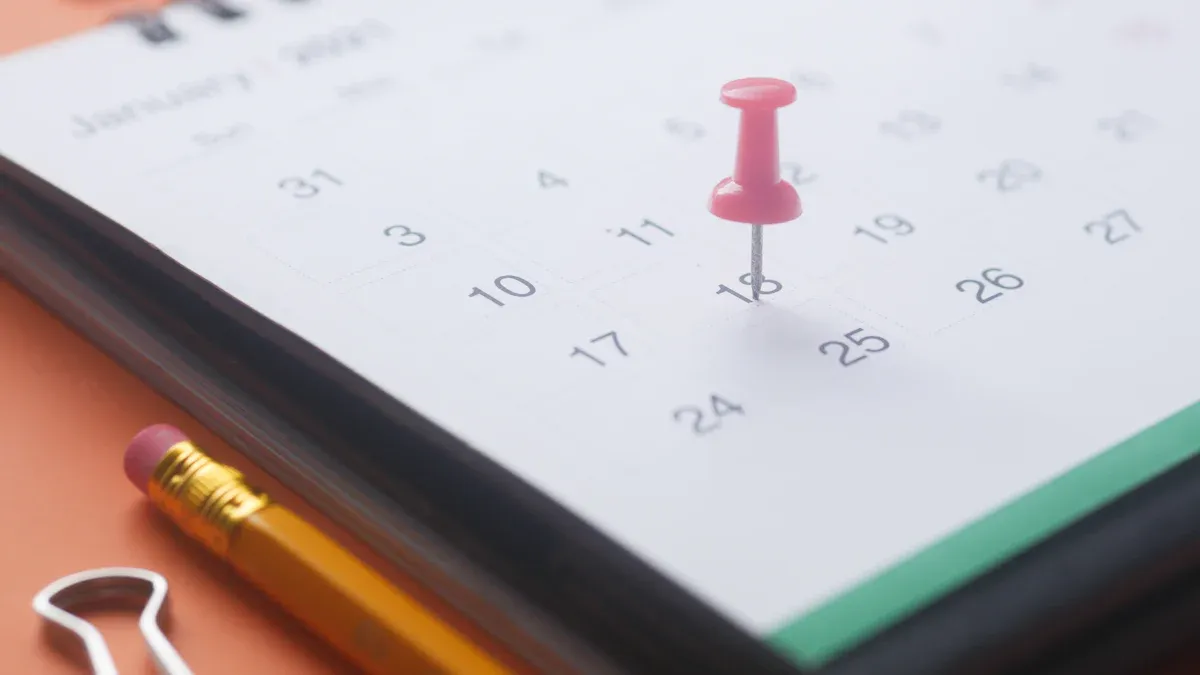
If you want to build one crucial habit, this method is for you. It uses powerful visual motivation to drive your daily routine. The ‘Don’t Break the Chain’ method is famously linked to comedian Jerry Seinfeld. He used it to ensure he wrote new jokes every single day.
A young comic once asked Seinfeld for advice. He said the way to be a better comic was to write every day. He explained his method: get a big wall calendar and a red marker. For each day you do your task, draw a big ‘X’ over that day. “After a few days you’ll have a chain,” Seinfeld said. “Your only job next is to not break the chain.”
How It Works
This system is beautifully simple. You pick one habit you want to build. Each day you complete it, you mark a big ‘X’ on your calendar. The goal is to create an unbroken chain of ‘X’s. This visual tracking is incredibly powerful. Your brain loves seeing progress, and each ‘X’ is a small win that releases a little bit of dopamine, making you want to do it again.
This method also uses a psychological trick called “loss aversion.” We hate losing something we’ve built more than we enjoy gaining something new. Breaking a 30-day streak feels much worse than the pleasure of hitting day 31. The fear of seeing that empty box and breaking your chain becomes a huge motivator to maintain consistency in your routine.
Who It’s For
This method is perfect for visual thinkers. It’s also ideal if you want to focus on building a single “keystone habit.” A keystone habit is one of those powerful habits that starts a chain reaction of other positive changes. For example, exercising every morning might lead you to eat better, sleep earlier, and feel more confident.
Focusing on one keystone habit can transform your entire routine without overwhelming you. This simple tracking system helps you build consistency for that one change that matters most. If you want to introduce a new routine with maximum impact, start here.
What You’ll Need
Getting started with this method is incredibly easy and affordable. You only need two items:
- A large wall or desk calendar 🗓️
- A thick, colorful marker 🖍️
That’s all it takes to start building a better routine today.
Method 3: The Dedicated Habit Notebook
If the all-in-one BuJo feels like too much and the single-focus calendar feels too narrow, the dedicated habit notebook is your perfect middle ground. It is the minimalist’s dream. This method strips away everything but the essentials, allowing you to track daily habits with pure, simple focus. It offers more structure than a calendar but less complexity than a full daily routine planner.
The Setup
Your setup can be as simple or as creative as you want. The most effective approach is a classic grid you draw yourself.
- Open to a new page in any notebook.
- List the habits you want to build down the left-hand side.
- Write the days of the month (e.g., 1-31) across the top.
- Fill in the box each day you complete your task.
This simple table gives you a clear, one-page overview of your entire month’s routine. If you prefer to skip the setup, you can also buy pre-made notebooks designed specifically for this style of tracking.
Who It’s For
This method is for you if you crave simplicity and want a tool with a single purpose. Unlike feature-heavy daily checklist apps that can create decision fatigue, this system has one job: tracking your progress. It’s a distraction-free zone for your personal growth.
The power of this approach is its focused nature. Physically writing down your progress engages your brain differently than tapping a screen. This intentional act helps you internalize your routine, making the habits stick without needing constant digital reminders. You build a stronger commitment because the process is tangible, turning your goals into something real you can hold. This is a level of connection a digital daily checklist tool often fails to provide.
What You’ll Need
This is the best part. You likely already have everything you need to start this powerful routine.
- Any notebook 📓
- Your favorite pen 🖊️
That’s it. This simple organization system is ready to help you build better habits today.
Tips for Staying Consistent
Choosing your tool is the first step. Now, let’s talk about how you can maintain consistency and make your new routine stick. Building good habits is a marathon, not a sprint. These simple tips will help you stay on track and build a lasting routine.
Keep It Visible
The principle “out of sight, out of mind” is powerful. If you hide your daily routine planner, you will forget about it. Your brain responds to environmental cues. Make your tracking system a powerful visual trigger.
Place your calendar or notebook where you can’t miss it.
- On your bathroom mirror
- Next to your coffee machine
- On the refrigerator door
Seeing your progress every day keeps your goals top of mind. This simple act of organization makes it much harder to ignore your new routine.
Link It to an Existing Routine
The easiest way to build a new routine is to attach it to an old one. This technique is called “habit stacking.” You use an established part of your daily routine as a trigger for your new habit. For example, you could decide: “After I pour my morning coffee, I will fill out my habit tracker.” This links the new action to a strong, existing routine, which helps build consistency without relying on willpower.
Start With 1-3 Habits
It is tempting to try to change everything at once. However, this is a common reason people fail. Starting too big can lead to burnout. Behavior change experts suggest you focus on a very small number of habits.
Choose one to three small things to focus on. This approach makes the tracking process feel manageable. You can build momentum with this simple routine. Once you establish consistency with these, you can add more to your routine.
Make It Visually Rewarding
Your brain loves rewards. Make the act of tracking your routine feel satisfying. Use colorful pens, fun stickers, or a thick marker to mark your success. This small action does more than you think.
The anticipation of filling in that box can trigger a release of dopamine in your brain. This makes the behavior feel good and reinforces your routine. Unlike many daily routine apps, you get to create a physical record of your wins. This visual proof of your consistency is a huge motivator.
You now have three great ways to track daily habits without daily routine apps.
- Bullet Journal: For total customization.
- ‘Don’t Break the Chain’ Calendar: For powerful visual motivation.
- Dedicated Notebook: For pure, simple tracking.
Remember, this journey is about progress, not perfection. Your new routine is personal and forgiving, unlike many daily checklist apps. Choose your tool and start building a better routine today. Your new routine awaits, so embrace this simple routine.
FAQ
What if I miss a day?
You missed a day? Don’t worry about it. One empty box does not erase your progress. The goal is consistency, not perfection.
Your only job is to get back on track the next day. Just pick up your pen and keep going. You’ve got this! 👍
Which method is best for a beginner?
You can start with the Dedicated Habit Notebook. It is the simplest system. You just need a notebook and a pen to begin. This method helps you focus on the act of tracking without any complex setup. It’s a great way to build your new routine.
How long does it take to form a habit?
It varies for everyone. Some studies say 21 days, others say over two months. You should focus on the daily action, not the timeline. Your consistency is what truly matters. The habit will form naturally as you continue your routine.
Can I combine these methods?
Absolutely! You can use a ‘Don’t Break the Chain’ calendar for one big goal and a notebook for smaller daily habits. The best system is the one that works for you. Feel free to experiment and create a routine that fits your life perfectly.