

You might not realize it, but vitamin d3 and k2 work together to keep your bones strong and your heart healthy. Vitamin d3 helps your body absorb calcium, while k2 guides that calcium into your bones and away from your arteries. Many people don’t get enough of these vitamins.
- Almost 40% of people in the US have low d3 levels.
- Deficiency in d3 is even more common in the Middle East and India.
When you get enough d3 and k2, you support your overall health and enjoy real Health Benefits.
Roles of Vitamin D3 and K2
Vitamin D3 and Health
You probably know that d3 helps your body absorb calcium, but it does much more for your health. D3 keeps your bones strong and supports your immune system. It also helps your heart work well and protects your brain. Take a look at this table to see how d3 works in your body:
| Biological Function | Description |
|---|---|
| Calcium and Phosphate Homeostasis | D3 balances calcium and phosphorus for bone health. |
| Immune Modulation | D3 helps your body fight off germs and stay healthy. |
| Cardiovascular Health | D3 lowers blood pressure and supports your heart. |
| Cognitive Protection | D3 protects your brain and may lower the risk of memory loss. |
| Regulation of Metabolic Pathways | D3 helps your body use energy and nutrients for overall health. |
Low d3 levels can lead to problems like weak bones, heart disease, and even memory issues. You might also face a higher risk of certain cancers and trouble breathing. D3 is important for your health at every age.
Vitamin K2 and Health
K2 is another vitamin that plays a big role in your health. K2 makes sure calcium goes to your bones and not your arteries. This keeps your bones strong and your blood vessels flexible. Here’s a quick look at what k2 does:
| Role of K2 | Effect |
|---|---|
| Bone Metabolism | K2 prevents bone loss and boosts bone strength. |
| Cardiovascular Health | K2 stops calcium from building up in your arteries. |
| Blood Coagulation | K2 helps your blood clot when you get a cut. |
| Elasticity of Blood Vessels | K2 keeps your blood vessels stretchy and healthy. |
| Prevention of Hemorrhagic Complications | K2 protects newborns from bleeding problems. |
If you don’t get enough k2, you might face health risks like osteoporosis, heart problems, and even issues with your skin and brain. K2 also helps your body fight inflammation and keeps your gut healthy.
Tip: You need both d3 and k2 for strong bones and a healthy heart.
Why Both Matter
Vitamin d3 and k2 work best when you get them together. D3 helps you absorb calcium, but k2 makes sure that calcium ends up in your bones, not your arteries. Studies show that vitamin d3 and k2 together improve bone health and lower the risk of heart disease. For example, research found that people who took both d3 and k2 had stronger bones and healthier arteries than those who did not. The combination of vitamin d3 and k2 is especially helpful for older adults and anyone who wants better health.
- You support your bones, heart, and overall health when you get enough vitamin d3 and k2.
- The teamwork between d3 and k2 helps you stay active and feel your best.
Synergy and Health Benefits

Calcium Metabolism
You might wonder how vitamin d3 and k2 actually help your body use calcium. Here’s what happens inside you:
- D3 boosts calcium absorption from your food and helps your kidneys keep the right amount of calcium in your blood.
- D3 also increases the production of calbindin, a protein that moves calcium where it’s needed.
- K2 activates osteocalcin, a special protein that locks calcium into your bones, making them stronger.
- K2 keeps calcium away from places it shouldn’t go, like your arteries and soft tissues.
When you get enough vitamin d3 and k2, you make sure calcium ends up in your bones, not your arteries. This teamwork gives you strong bones and supports a healthy heart. You get the health benefits of better calcium absorption and less risk of problems like stiff arteries or weak bones.
Cardiovascular Health
Your heart works hard every day. You want to keep it healthy, right? Vitamin d3 and k2 help your heart by guiding calcium away from your blood vessels. If calcium builds up in your arteries, they get stiff and your heart has to work harder. K2 stops this by activating proteins that block calcium from sticking to your arteries.
Take a look at how vitamin d3 and k2 protect your heart and blood vessels:
| Evidence Type | Findings |
|---|---|
| Association with Cardiac Remodeling | Low vitamin d and k status linked to increased left ventricular mass index (5.9 g/m2.7; 95% CI: 1.8, 10.0 g/m2.7) |
| Mortality Risk | Low vitamin d and k status associated with increased all-cause mortality (HR of 1.64; 95% CI: 1.12, 2.39) |
| Vitamin D Deficiency | Linked to arterial hypertension, type 2 diabetes, and higher incidence of heart failure |
| Role of Vitamin K | Activates Gla-proteins that inhibit vascular calcification; deficiency leads to increased arterial calcification and stiffness |
| High-Risk Populations | Low vitamin k status associated with incident CVD, especially in individuals with type 2 diabetes |
K2 also activates Matrix Gla Protein, which blocks calcium from building up in your arteries. When you combine d3 and k2, you lower your risk of heart disease and keep your arteries flexible. You get the health benefits of a healthy heart and better blood flow.
Tip: If you want a healthy heart and strong bones, make sure you get enough vitamin d3 and k2.
Bone Health
You need strong bones to stay active and enjoy life. Vitamin d3 and k2 work together to give you healthy bones and teeth. D3 helps your body absorb calcium, while k2 makes sure that calcium goes into your bones.
Studies show that people who take both d3 and k2 have better bone mineral density. Here’s what researchers found:
| Study Focus | Participants | Findings |
|---|---|---|
| Effect of combined therapy with vitamin k2 and vitamin d3 on bone mineral density | 172 postmenopausal women with lumbar spine BMD <0.98 g/cm² | Significant differences in BMD between combined therapy and single therapies; 26.7% showed improvement in BMD. |
| Effect of combined administration of vitamin d3 and vitamin k2 on lumbar spine BMD | 92 osteoporotic postmenopausal women aged 55-81 | Significant increase in BMD in the combined group compared to calcium and single therapies. |
You get the health benefits of stronger bones and less risk of osteoporosis when you combine d3 and k2. K2 helps your bones hold onto calcium, and d3 makes sure you absorb enough from your diet. This combo keeps your bones healthy as you age.
- The combined use of vitamin d3 and k2 improves bone mineral density, especially in postmenopausal women.
- K2 boosts the effects of d3 on bone mineralization, making your bones stronger.
- K2 also helps your bones use the calcium that d3 helps you absorb.
When you get enough vitamin d3 and k2, you support your bones, heart, and overall health. You enjoy the health benefits of strong bones, a healthy heart, and better longevity.
Vitamin D3 and K2 for Wellness
Immune and Hormonal Health
You want your immune system to work well every day. Vitamin d3 and k2 help your body fight off germs and keep you feeling strong. D3 boosts the production of special proteins that attack bacteria and viruses. K2 helps your body clean out damaged cells and controls inflammation. Take a look at how these vitamins support your immune system function:
| Vitamin | Evidence Description |
|---|---|
| D3 | Stimulates production of cathelicidin and β defensin-2, which are antimicrobial. |
| K2 | Plays a role in autophagy, aiding in the removal of damaged cells. |
| D3 | Associated with lower risk of respiratory infections and stimulates production of antimicrobial peptides. |
| K2 | Modulates NF-kB pathway and inhibits cytokine release, impacting inflammation and immune response. |
| D3 | Plays a role in developing dendritic and natural killer cells, essential for immune defense. |
| K2 | Supports immune regulation and has anti-inflammatory effects. |
D3 and k2 also help balance your hormones. D3 affects estrogen and progesterone, which are important for menstrual cycles, fertility, and pregnancy. K2 keeps calcium moving to the right places, which helps your bones and can influence hormonal health. Both vitamins support your brain and help manage inflammation, which is key for overall health.
Mobility and Exercise
You want to stay active and enjoy your favorite activities. D3 and k2 keep your bones strong and your muscles working well. D3 helps your body absorb calcium, and k2 makes sure that calcium goes into your bones. This teamwork lowers your risk of osteoporosis and keeps you moving.
- D3 and k2 are essential for strong bones, which help you walk, run, and play.
- D3 boosts muscle growth and helps you recover faster after exercise.
- K2, especially MK-4, prevents bone loss and improves bone health.
- Both vitamins support your heart, which is important for exercise and overall health.
If you get enough d3 and k2, you feel more energetic and ready for diet and exercise. You lower your risk of fractures and keep your bones healthy as you age.
Overall Health and Longevity
You want to live a long and healthy life. D3 and k2 help you reach that goal. Studies show that low levels of d3 and k2 raise your risk of heart problems and lower your chances of living longer. When you get enough of both, you protect your heart and support overall health.
| Study | Findings |
|---|---|
| Combined low vitamin D and K status amplifies mortality risk | Low concentrations of vitamins D and K are linked to increased all-cause mortality, cardiovascular health issues, and diminished activation of vitamin K-dependent proteins, leading to vascular calcification and death. |
| A high menaquinone intake reduces the incidence of coronary heart disease | Higher dietary intake of vitamin K2 is associated with a lower incidence of coronary heart disease, particularly with subtypes MK-7, MK-8, and MK-9. |
Older adults who get enough d3 and k2 enjoy better joint health, less cognitive decline, and improved quality of life. You can support your overall health and wellness by making sure you get enough d3 and k2 through diet and exercise. A healthy lifestyle helps you stay active, feel good, and enjoy life.
Tip: Focus on getting enough vitamin d3 and k2 every day to support your bones, heart, immune system, and overall health.
Getting Enough for Health
Dietary Sources and Sunlight
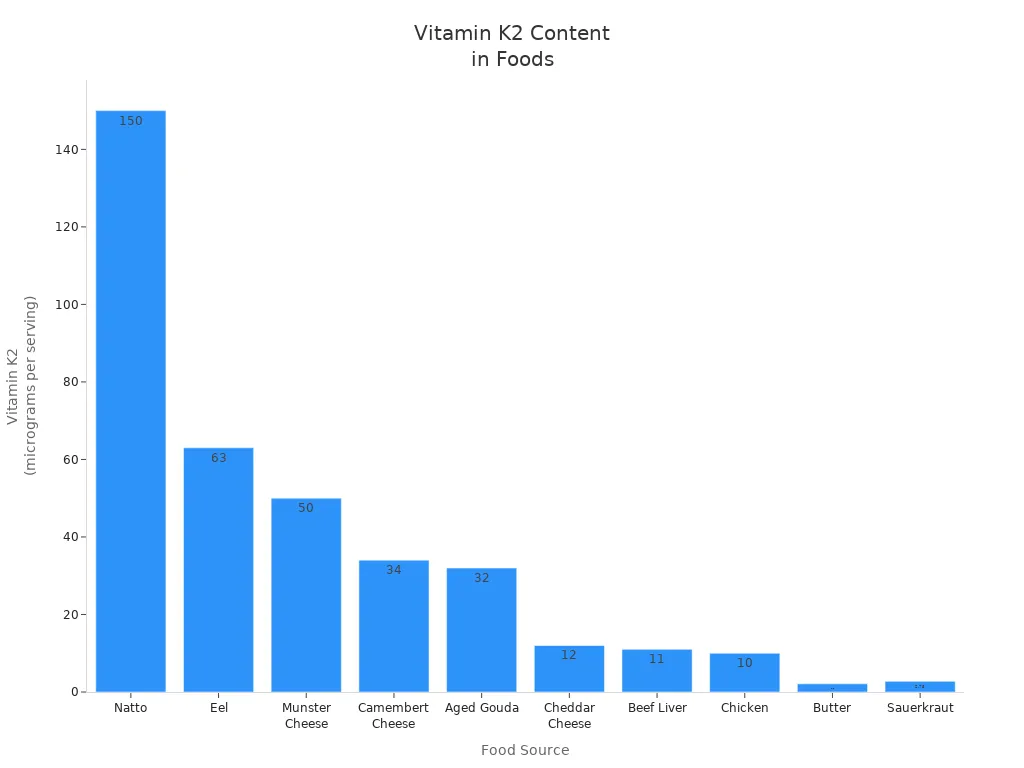
You can boost your health by adding foods rich in vitamin d3 and k2 to your diet. Natto, a Japanese fermented soybean dish, packs the most k2. Cheese lovers get k2 from aged Gouda, Camembert, and Munster. Chicken, beef liver, and eel also give you k2. Butter and sauerkraut offer smaller amounts. Here’s a quick look at some top sources:
| Food Source | Vitamin K2 Content (per serving) |
|---|---|
| Natto | 150 micrograms (1 tablespoon) |
| Eel | 63 micrograms (100 grams) |
| Munster Cheese | 50 micrograms (50 grams) |
| Camembert Cheese | 34 micrograms (50 grams) |
| Aged Gouda | 32 micrograms (50 grams) |
| Cheddar Cheese | 12 micrograms (50 grams) |
| Beef Liver | 11 micrograms (100 grams) |
| Chicken | 10 micrograms (100 grams) |
| Butter | 2.1 micrograms (1 tablespoon) |
| Sauerkraut | 2.75 micrograms (half-cup) |
You get d3 from fatty fish, egg yolks, and fortified milk. Sunlight helps your body make d3. Spending 30 to 60 minutes outside each day gives you a boost. In North India, one hour in the sun raised d3 levels. In Manchester, adults saw a big jump after 45 minutes outside three times a week.
Supplementation and Safety
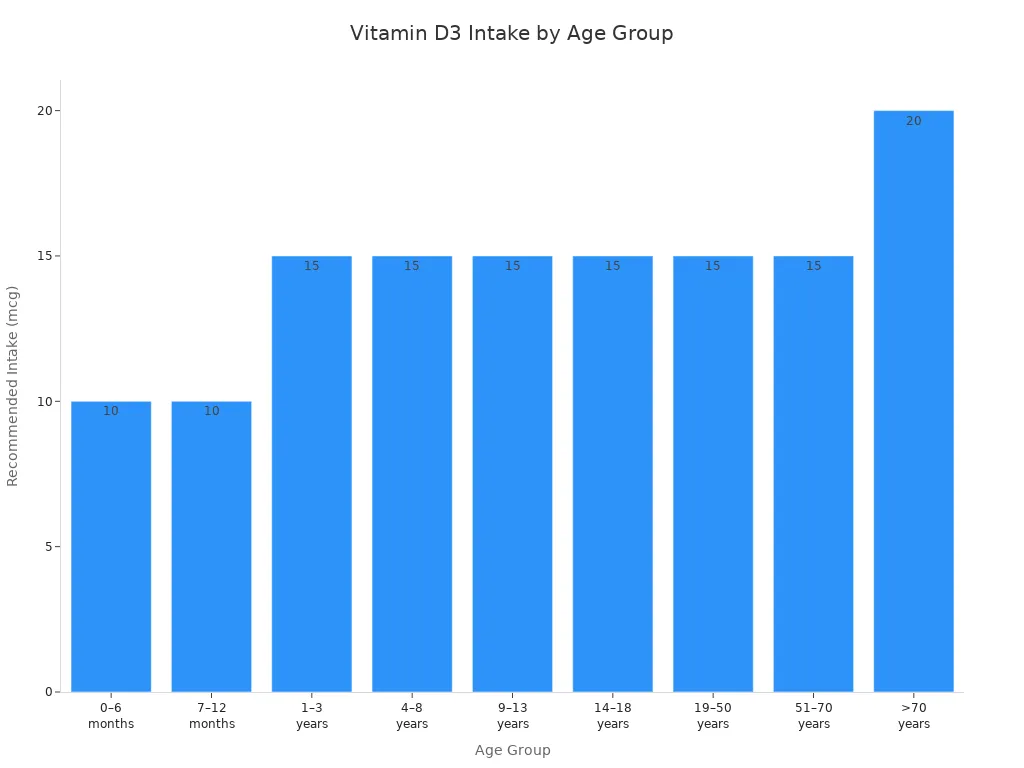
Sometimes, diet and sunlight are not enough. You may need supplements to keep your bones and heart strong. The recommended daily intake for d3 is 600 IU for most people and 800 IU for those over 70. For k2, there is no official guideline, but many experts suggest 90–120 micrograms daily.
| Age Group | Recommended Intake (mcg) | Recommended Intake (IU) |
|---|---|---|
| 0–6 months | 10 mcg | 400 IU |
| 7–12 months | 10 mcg | 400 IU |
| 1–3 years | 15 mcg | 600 IU |
| 4–8 years | 15 mcg | 600 IU |
| 9–13 years | 15 mcg | 600 IU |
| 14–18 years | 15 mcg | 600 IU |
| 19–50 years | 15 mcg | 600 IU |
| 51–70 years | 15 mcg | 600 IU |
| >70 years | 20 mcg | 800 IU |
Tip: Always talk to your doctor before starting vitamin d3 and k2 supplements, especially if you take blood thinners or have kidney problems.
Who Needs Supplements?
You may need vitamin d3 and k2 supplements if you:
- Stay indoors most days
- Live in northern areas with little sun
- Eat a diet low in fish, eggs, or fermented foods
- Are older or have health conditions that affect absorption
Almost 90% of people do not get enough d3. Signs of low k2 include easy bruising and bleeding gums. If you want strong bones and better health, check your levels and ask your doctor about supplements.
You’ve learned how vitamin d3 and k2 work together to keep your bones strong and your heart healthy. D3 helps your body absorb calcium, while k2 makes sure calcium goes to your bones and not your arteries. Experts say vitamin d3 and k2 boost bone strength, support blood vessels, and help your immune system. You can get d3 from fatty fish, egg yolks, and sunlight. K2 comes from hard cheeses and grass-fed dairy. If you don’t get enough from food or sun, consider a combined d3 and k2 supplement. Always talk to your healthcare provider before starting new supplements. Taking care of your health with vitamin d3 and k2 helps you stay active and feel your best. Smart choices today mean a healthier tomorrow! 🌞🧀
- D3 and k2 work as a team for bone, heart, and immune health.
- You can find d3 in fish and eggs, and k2 in cheese and dairy.
- Ask your doctor about d3 and k2 supplements if you need extra support.
FAQ
What happens if you take vitamin D3 without K2?
You absorb more calcium with D3, but without K2, calcium may build up in your arteries. This can lead to stiff blood vessels. You want K2 to guide calcium into your bones for better health.
Can you get enough vitamin D3 and K2 from food alone?
You might struggle to get enough from food, especially if you avoid fish or fermented foods. Sunlight helps with D3, but K2 is harder to find. Many people choose supplements for extra support.
Who should avoid vitamin D3 and K2 supplements?
You should talk to your doctor if you take blood thinners or have kidney problems. Some people need special advice before starting supplements. Always check with a healthcare provider first.
How do you know if you need more vitamin D3 or K2?
You may notice weak bones, tiredness, or bleeding gums. Your doctor can check your levels with a blood test. If you stay indoors or eat few animal foods, you might need more.
Is it safe to take vitamin D3 and K2 every day?
Most people can safely take these vitamins daily. You should follow the recommended dose. Too much D3 or K2 can cause problems. Always read the label and ask your doctor if you are unsure.