
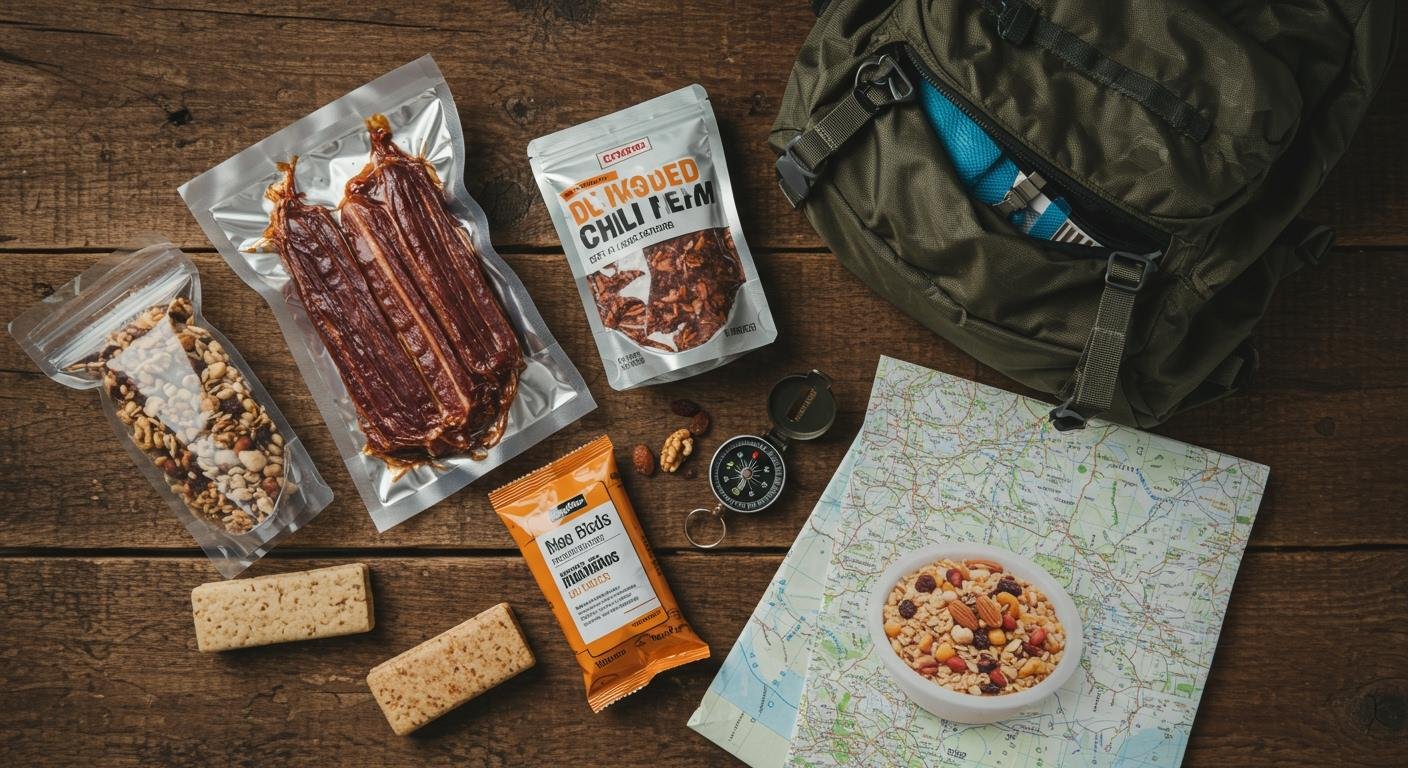
You finish a long hike, feeling tired but accomplished. The last thing you want is a bland meal. Successful backpacking requires delicious, easy fuel. You need great backpacking food ideas to power your adventure. These 11 flavor-stable foods are perfect hiking snack ideas. They will help you hit your daily calorie goals.
Fuel Your Adventure! Backpacking can burn between 2,500 to 4,500 calories daily. Packing calorie-dense foods is essential.
Here are some easy options for your next trip:
- Hard Cheeses
- Cured Meats
- Nut Butter Squeeze Packs
- Dried Fruit
- Nuts, Seeds, and Granola
- Tuna or Chicken Pouches
- Tortillas and Crackers
- Jerky and Meat Sticks
- Energy Bars
- Instant Oatmeal
- Powdered Drink Mixes
1. Hard Cheeses: Classic Flavor-Stable Foods
Forget squished sandwiches and bland trail mix. A block of hard cheese is one of the most satisfying and reliable flavor-stable foods you can carry. It adds a touch of gourmet comfort to any backpacking meal, turning a simple snack into a memorable moment.
Trail Benefits
You might worry about taking cheese on the trail without a fridge. Don’t. Hard cheeses were developed long ago as a way to preserve milk for long periods. They have a low moisture content, which makes them naturally resilient.
- Aged Cheddar
- Parmesan
- Gouda
These types of cheese can easily last for days on a backpacking trip, even in warm weather. Their flavor often even improves as they come to room temperature.
🧀 A Food Built for the Trail Historically, cheese was a nomadic food. Its durability made it a perfect, long-lasting source of calories and nutrients for people on the move.
Energy Profile
Cheese is an energy powerhouse. It’s packed with calories, fat, and protein, giving you the sustained fuel needed for long days of hiking. A small piece provides a significant energy boost. This makes it an easy way to replenish your energy stores without eating a large volume of food.
Here is a quick look at the nutritional value you can expect from just one ounce of aged Gouda:
Packing Tips
Proper packing is key to keeping your cheese in great shape. Avoid plastic wrap or bags. Plastic traps moisture and can make the cheese sweaty and oily. Instead, wrap your block of cheese loosely in wax paper or a cheesecloth. This allows it to breathe and prevents it from getting slimy. For easier handling on your backpacking adventure, consider slicing or cubing your cheese at home before you leave.
2. Cured Meats
Pairing your hard cheese with some savory cured meat takes your trail meal to the next level. Meats like salami or summer sausage are fantastic flavor-stable foods. They provide a satisfying, salty kick that you often crave after a long day of hiking.
Trail Benefits
You don’t need a refrigerator to enjoy meat on your backpacking trip. Cured meats were invented centuries ago, long before modern cooling. People used salt and drying techniques to preserve meat for long voyages and storage. This process removes moisture, which stops bacteria from growing. For your trip, look for these options:
- Hard Salami
- Summer Sausage
- Prosciutto
These meats are dense, flavorful, and ready to eat. They make an easy and delicious addition to any lunch or dinner.
Energy Profile
Cured meats are an excellent source of long-lasting energy. They are loaded with fat and protein, which your body digests slowly. This gives you sustained power for tough climbs. They are also high in sodium, which helps you replace the essential salts you lose when you sweat. A small serving goes a long way in refueling your body.
Here’s a look at what you get from a typical serving of hard salami:
| Nutrient | Amount (per oz) |
|---|---|
| Total Fat | ~12g |
| Sodium | ~500mg |
Packing Tips
Keeping your cured meats fresh is simple. Most pre-packaged sausages come vacuum-sealed, which is perfect for backpacking. This packaging minimizes waste and keeps the meat protected from air and moisture. Once you open it, try to eat it within a day or two.
🍖 Pro Tip for Packing Leave whole salamis or sausages in their original vacuum-sealed packaging until you are ready to eat them. This maximizes their shelf life on the trail.
3. Nut Butter Squeeze Packs
Nut butter squeeze packs are a game-changer for backpacking fuel. They offer a delicious and incredibly convenient way to get calories without stopping to cook. Forget carrying a heavy, messy jar. These single-serving pouches are lightweight and ready whenever you need a quick energy hit.
Trail Benefits
Squeeze packs solve many common trail food problems. They are designed for life on the move. You don’t need a knife or spoon, which means less to pack and clean. Just tear one open and enjoy. This makes them perfect for a quick snack while you hike.
- Lightweight: They are much lighter than a full jar, saving you precious weight in your pack.
- Convenient: You can eat them directly from the pouch, making them an easy, no-mess option.
- Travel-Friendly: They are small and fit perfectly in a hip belt pocket for quick access.
Energy Profile
Nut butters are calorie-dense, making them one of the most efficient energy sources for backpacking. They are rich in healthy fats and protein, which provide slow-burning, sustained energy for long days on the trail. A single pack can give you a significant boost. Brands like Justin’s or Perfect Keto offer great options.
Here is a look at the macronutrient profile for a typical almond butter pack:
| Product Type | Fat (%) | Carbs (%) | Protein (%) |
|---|---|---|---|
| Justin’s Almond Butter, Classic | 80% | 9% | 11% |
| Justin’s Almond Butter, Maple | 75% | 16% | 10% |
Packing Tips
Packing nut butter is simple. The individual pouches are durable and rarely leak. You can toss them anywhere in your pack without worry. They are incredibly versatile for meals and snacks.
🥜 Trail Pairing Ideas Squeeze nut butter onto tortillas or crackers for a more substantial snack. You can also add it to your morning oatmeal for extra flavor and calories. For the quickest boost, just eat it straight from the pack!
4. Dried Fruits
When you need a quick burst of energy on the trail, dried fruit is your best friend. It provides a natural sweetness that can satisfy sugar cravings without the crash you get from candy. Plus, it’s incredibly lightweight and takes up very little space in your pack, making it a top choice for any backpacking trip.
Trail Benefits
Dried fruit offers a delicious and convenient way to refuel. Unlike fresh fruit, you don’t have to worry about it getting bruised or squished. It’s ready to eat straight from the bag, giving you a simple snack you can enjoy while walking. Popular dried fruit options include:
- Apricots
- Mangoes
- Raisins
- Dates
- Banana Chips
These choices give you a great variety of flavors and textures for your backpacking adventure.
Energy Profile
Dried fruit is a fantastic source of simple carbohydrates, which your body quickly converts into energy. This makes it perfect for a midday pick-me-up. While high in natural sugar, options like dates and raisins have a moderate glycemic index, meaning they provide a steadier energy release. The drying process removes water, which concentrates the nutrients. This makes every bite of fruit more powerful. It’s an easy way to get calories and essential minerals.
🍎 Nutrient Concentration in Dried Fruit The drying process changes the nutritional profile of a fruit. Here’s a quick look at what happens:
Nutrient Type Effect of Drying Process Vitamins Vitamin C is often reduced by heat and air. Minerals Potassium and Iron become more concentrated. Carbohydrates Sugars become concentrated, boosting calories.
Packing Tips
Packing dried fruit is simple. You can buy it pre-packaged or purchase it in bulk to save money. Repackage your selections into small, resealable plastic bags. This helps with portion control and keeps them fresh. For a more interesting snack, try making your own trail mix by combining your favorite dried fruits with nuts and seeds. This creates a balanced, energy-dense snack perfect for long days of backpacking.
5. Nuts and Seeds
Nuts and seeds are the ultimate backpacking snack. They are tough, tasty, and packed with the energy you need to conquer the trail. You can toss them in your pack without worrying about them getting crushed. Their satisfying crunch offers a welcome change from softer trail foods.
Trail Benefits
Nuts and seeds are incredibly resilient, making them perfect for the rough environment of a backpack. They provide a satisfying texture and flavor that fights off trail fatigue. You can eat them by the handful for a quick snack or mix them into your meals for an extra boost. Some great options for your trip include:
- Almonds
- Walnuts
- Pistachios
- Sunflower Seeds
- Pumpkin Seeds (Pepitas)
These choices are all durable and delicious, making them a reliable part of your food strategy.
Energy Profile
When it comes to energy, nuts and seeds are true powerhouses. They are some of the most calorie-dense foods you can carry, meaning you get a lot of fuel for very little weight. This is crucial for efficient backpacking. They are full of healthy fats and protein, which provide slow-burning, sustained energy for long hikes.
🌰 Fuel by the Handful A small handful of nuts can provide a significant amount of energy. Check out how many calories you get from just one ounce:
| Nut or Seed | Calories per ounce |
|---|---|
| Almonds | 160 |
| Sunflower seeds | 165 |
| Walnuts | 185 |
Packing Tips
Packing nuts and seeds is incredibly easy. You can buy them in bulk to save money and then repackage them into smaller, resealable bags for daily portions. This helps you manage your food supply on the trail. For a more complete snack, create your own trail mix. Combine your favorite nuts and seeds with some dried fruit. This adds carbohydrates for quick energy and balances the rich flavor of the nuts. Adding a little dried fruit also enhances the overall taste and texture of your mix.
6. Tuna or Chicken Pouches
Canned meat is too heavy for backpacking. Luckily, foil pouches of tuna or chicken give you a fantastic protein source without the weight. These single-serving packets offer a savory, satisfying flavor that you will crave after a long day on the trail. They are a huge upgrade from processed lunch meats.
Trail Benefits
Foil pouches are one of the best ready-to-eat meals for the backcountry. They solve the problem of carrying heavy cans and don’t require any refrigeration. You can find them in many different flavors, which keeps your trail diet interesting.
- They are lightweight and flat, saving space in your pack.
- The foil packaging is durable and won’t leak.
- They have a long shelf life, making them perfect for any trip length.
These pouches offer a fresher taste and a firmer texture than their canned counterparts.
Energy Profile
Tuna and chicken pouches are packed with high-quality protein, which helps your muscles recover. They are also a great source of healthy omega-3 fats. Unlike canned options that are full of water, pouches give you more usable food and calories per ounce. This makes them a very efficient fuel source for your backpacking adventure.
Here’s how a typical pouch compares to a can:
| Feature | Tuna Pouch | Canned Tuna |
|---|---|---|
| Added Liquid | Almost none | Lots of water |
| Usable Product | 100% consumable | Less due to draining |
| Ingredients | Tuna, sea salt | Tuna, water, broth, additives |
You get more pure protein and energy without carrying extra water weight.
Packing Tips
Packing these pouches is incredibly easy. They are already sealed and ready to go. You can slide them into any open spot in your food bag. They are versatile enough to be eaten straight from the pouch or mixed with other foods.
🐟 Trail Meal Idea For a delicious and filling dinner, mix a pouch of chicken with a serving of instant mashed potatoes. It’s a warm, savory meal that’s simple to prepare after a tough hike.
7. Tortillas and Crackers
You need a versatile base for your trail meals, and tortillas and crackers are the perfect solution. They serve as an edible plate for your cheese, cured meats, or nut butter. Unlike bread, which gets squished, or pitas, which go stale, these options are built for the rigors of backpacking.
Trail Benefits
Flour tortillas are a backpacker’s dream. They are much heartier than corn tortillas, so you can stuff them with fillings without worrying about them breaking. They pack down flat, taking up minimal space in your pack or bear canister. Sturdy crackers like Triscuits or Wheat Thins also hold up well and provide a satisfying crunch that you’ll appreciate on the trail. They offer a great alternative when you want a different texture for your snacks.
Energy Profile
Tortillas and crackers are excellent sources of carbohydrates, giving you the quick energy needed to power through a tough afternoon of hiking. A single tortilla can provide a substantial calorie boost to fuel your body. They are a lightweight and efficient way to carry the carbs you need for your backpacking adventure.
Here is a look at the energy you get from a standard 8-inch flour tortilla:
| Nutrient | Amount (per 8-inch tortilla) |
|---|---|
| Calories | ~146 |
| Carbohydrates | 25g |
| Protein | 4g |
| Fat | 3g |
Packing Tips
Keeping your tortillas and crackers intact is easy with a little planning. Leave tortillas in their original packaging to keep them fresh and pliable. You can fold the bag over and secure it with a rubber band. For crackers, avoid flimsy boxes. Pack them in a small, hard-sided container to prevent them from turning into a bag of crumbs.
🌯 Easy Trail Lunch Spread a nut butter squeeze pack on a flour tortilla, add some dried fruit, and roll it up. You have a delicious, no-cook wrap that you can eat on the move.
8. Jerky and Meat Sticks
Jerky and meat sticks are classic backpacking foods for a reason. They offer a savory, protein-packed punch that satisfies hunger and helps your muscles recover. You get a delicious, chewy snack that requires no preparation.
Trail Benefits
Jerky and meat sticks are built for the trail. They are lightweight, durable, and ready to eat straight from the package. You have options for texture, too. Traditional jerky is often tough and chewy, giving you a long-lasting snack. Modern meat sticks are generally softer and more tender. This variety lets you choose what you prefer for your backpacking trip. Both are preserved to last for months unopened, making them a reliable choice.
🥩 A Note on Sodium The high salt content in jerky helps with preservation. It also helps you replace the essential salts you lose through sweat during a long hike.
Energy Profile
These meat snacks are an excellent source of protein. Protein is crucial for repairing your muscles after a tough day of hiking. A single ounce of beef jerky provides a significant amount of this key nutrient. This makes it an efficient way to refuel your body.
Here’s a quick look at the protein you can expect from a one-ounce serving:
| Snack Type | Protein (per oz) |
|---|---|
| Beef Jerky | 9-12g |
This high-protein content gives you sustained energy without the sugar crash you might get from other snacks.
Packing Tips
Packing jerky and meat sticks is incredibly easy. Most come in vacuum-sealed packages that you can toss right into your food bag. They are tough and won’t get crushed. While they don’t need refrigeration, you should plan to eat them within a few days after opening the package to ensure freshness. This makes them a perfect, no-fuss addition to your backpacking food supply.
9. Energy Bars: Convenient Hiking Snack Ideas

Energy bars are the ultimate grab-and-go fuel for backpacking. You can find a bar for every taste and dietary need. They are one of the most popular hiking snack ideas because they offer a quick calorie hit without any prep work.
Trail Benefits
Energy bars are designed for convenience. You can eat them with one hand while you hike. They are tough and can handle being tossed around in your pack. Their long shelf life is no accident. Manufacturers use specific ingredients to keep them fresh and flavorful.
- Low-moisture ingredients like oils and sugars prevent spoilage.
- Honey and invert sugar act as natural preservatives.
- Whole dried eggs are used instead of fresh eggs for stability.
These elements ensure your granola or energy bar tastes great even after days on the trail.
Energy Profile
Not all bars are created equal. You should choose a bar based on your energy needs. A granola bar gives you quick-burning carbs for immediate energy. Protein bars are better for muscle recovery after a long day. Understanding the difference helps you plan your backpacking nutrition.
📊 Bar Breakdown: Granola vs. Protein Here’s a quick comparison to help you choose the right bar for the right moment:
| Bar Type | Primary Nutrient | Best For |
|---|---|---|
| Granola Bar | Carbohydrates | Mid-hike energy boost |
| Protein Bar | Protein | End-of-day muscle repair |
Packing Tips
Packing bars is incredibly easy. To save space and reduce weight, take your bars out of their bulky cardboard boxes. You can pack them loose in your food bag. Always check the wrappers for any small tears before you leave. A torn wrapper can lead to a stale or crumbly mess. Keep one or two bars in your hip belt or a side pocket for a quick and accessible snack on the move.
10. Instant Oatmeal
A warm breakfast can completely change your mood on a chilly morning in the backcountry. Instant oatmeal gives you that comforting start without any fuss. It’s a classic backpacking meal that provides a hot, satisfying, and easy way to fuel up for the day ahead.
Trail Benefits
Instant oatmeal is a fantastic choice for any backpacking trip. The single-serving packets are lightweight and pack neatly into a bear canister or food bag. You get a warm meal while using very little fuel.
- It has a long shelf life, lasting for a year or more without refrigeration.
- You save valuable stove fuel because it cooks almost instantly with just hot water.
- Unlike some granola options, it provides a hot, comforting meal to start your day.
Energy Profile
Oatmeal is a nutrient-dense whole grain that delivers excellent trail nutrition. It’s loaded with complex carbohydrates, which provide steady, long-lasting energy for your morning hike. It also contains fiber, protein, and essential minerals to keep you feeling full and strong. Adding nuts or seeds can boost the fat and protein content, making it an even more powerful breakfast. A simple bowl of oatmeal gives you the balanced energy you need to tackle the trail.
Packing Tips
The original boxes for oatmeal packets are bulky and create unnecessary waste. You can save a lot of space by repackaging your oatmeal. Empty the contents of several packets into a single resealable plastic bag. This method minimizes trash and makes your food supply more compact. You can also add other dry ingredients like powdered milk, brown sugar, or dried fruit directly into the bag.
🥣 Make Your Own Mix Create your own custom instant oatmeal to save money. Combine quick oats, powdered milk, a little sugar, and cinnamon in a bag. You can make a big batch at home and portion it out for your trip. It’s a great alternative to store-bought granola and lets you control the ingredients.
11. Key Principles for Backpacking Food
Choosing the right food goes beyond just picking tasty snacks. You need a smart strategy to stay fueled and happy. Following a few key principles makes planning your backpacking meals much easier.
Focus on Calorie Density
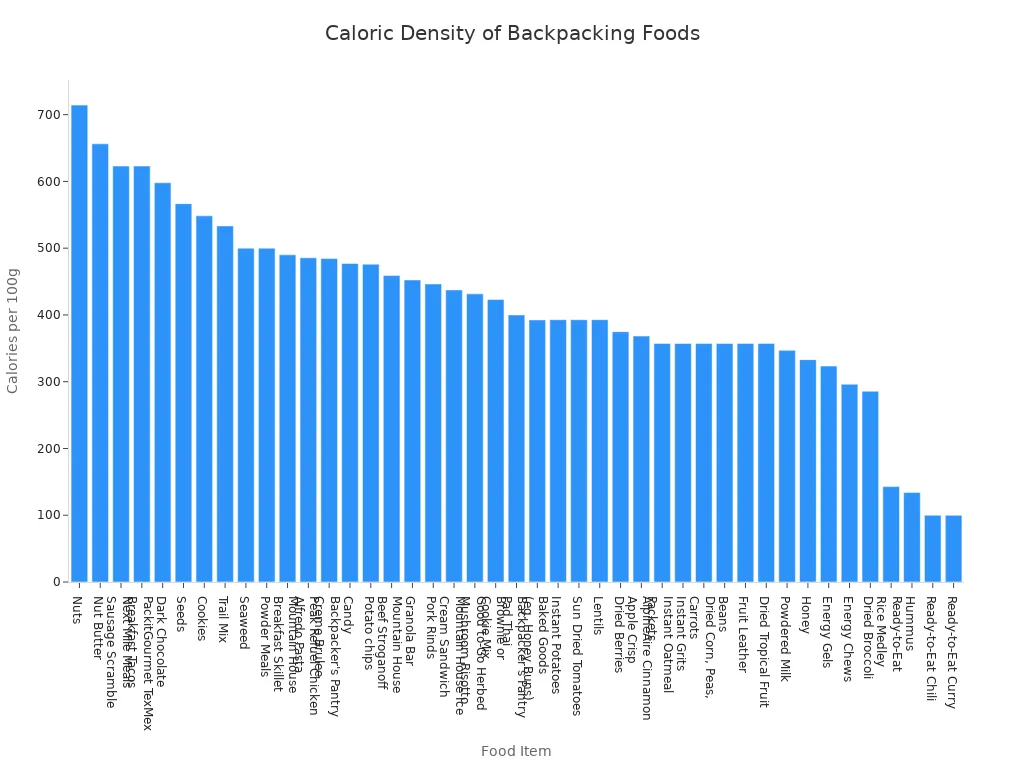
When you carry everything on your back, every ounce matters. Calorie density is the measure of how many calories a food has for its weight. You want foods that give you the most energy for the least amount of weight. This is the number one rule for efficient backpacking.
⚖️ Smart Fueling Aim for foods that provide at least 100 calories per ounce (or about 350 calories per 100 grams).
Nuts, seeds, and oils are excellent examples. They pack a huge energy punch in a small package. Here’s a look at how different foods stack up.
| Food Item | Calories per 100g |
|---|---|
| Nuts | 714.3 |
| Nut Butter | 656.3 |
| Dark Chocolate | 598 |
| Seeds | 566.7 |
| Granola Bar | 452.4 |
| Instant Oatmeal | 357.1 |
Prioritize Low Moisture
Water is heavy and it helps food spoil faster. The best flavor-stable foods have very little moisture. This is because bacteria and mold need “free” water to grow. Removing water through drying or dehydration makes food lighter and helps it last for days without a fridge. This simple principle is why jerky, dried fruit, and instant meals are perfect for the trail.
Test Before You Go
Never take a new food on a backpacking trip without trying it first. An easy meal at home might not be so great after a long day of hiking. Testing your meals helps you avoid bad surprises.
- You might discover you don’t like the taste or texture.
- Some new foods can cause digestive issues your body isn’t used to.
- You can practice cooking the meal to see how much time and fuel it really takes.
A quick test run at home ensures your trail meals are both delicious and agreeable.
Your food plan is crucial for a successful trip. Choosing the right flavor-stable foods ensures you have lightweight, high-energy meals you actually want to eat. A smart strategy helps you avoid common mistakes and makes your hike more enjoyable.
💡 Final Tip Great backpacking food ideas go beyond just calories. Avoid overpacking by focusing on a variety of easy, flavor-stable foods. What are your favorite hiking snack ideas or go-to trail fruit? Share them below!
FAQ
How many calories do I really need per day?
Your daily calorie needs depend on the hike’s difficulty and your body weight. A good starting point is around 3,000 calories. You can adjust this number up or down after your first few trips based on your energy levels.
How do I protect my food from bears?
You must protect your food from wildlife. Use a bear canister or a proper bear bag. Always store your food at least 200 feet away from your tent. This simple step keeps both you and the animals safe.
What’s the best way to manage trail trash?
Plan to pack out everything you pack in. Repackage your food at home to reduce waste on the trail. You should carry a separate, durable bag just for your trash. This helps keep the wilderness clean for everyone. 🏞️
Can I bring any fresh food on my trip?
Yes, you can enjoy fresh food on your first day! An apple or a sandwich makes a great treat. Just remember it’s heavy and can spoil. You should plan to eat any fresh items on day one.